Préférences sur les cookies

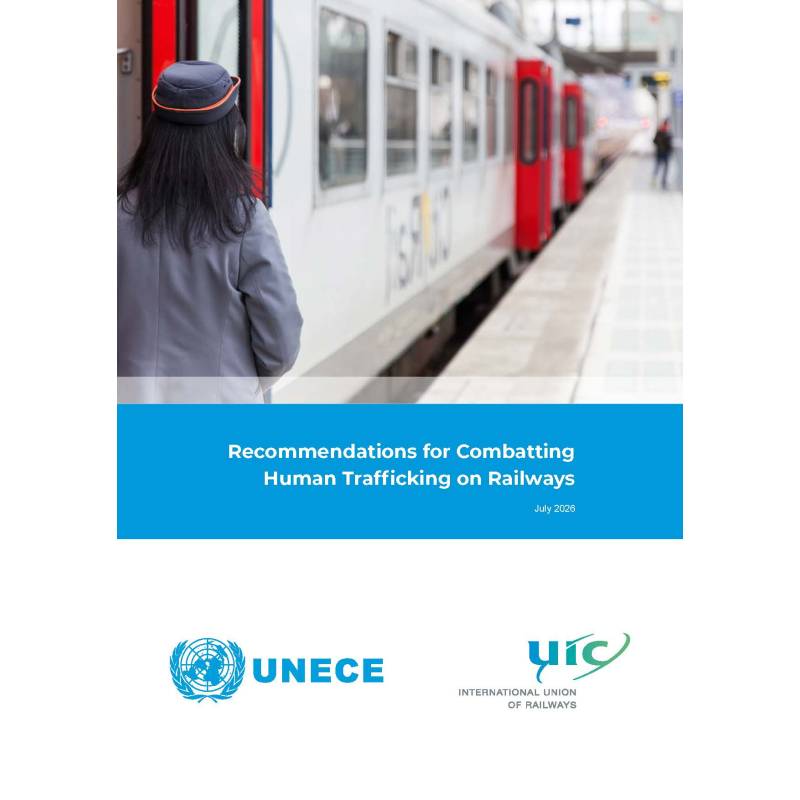
Recommendations for Combatting Human Trafficking on the Railways
Human trafficking remains one of the world's most serious forms of organised crime and human rights abuses. More than 200,000 victims were detected and reported by 156 countries between 2020 and 2023, although the true scale is likely much higher. With railways transporting millions of passengers every day across national and international routes, traffickers can exploit rail networks to recruit, move and control victims. At the same time, railway staff and operators are uniquely positioned to identify indicators of trafficking, report suspicious activity and support law enforcement efforts.
Despite the railway sector's strategic role in combating human trafficking, there has been limited international guidance specifically tailored to railway operations. The new UNECE-UIC recommendations address this gap by providing practical, evidence-based measures that can be incorporated into railway security, operational and procurement policies. The recommendations were developed by the UNECE-UIC Informal Expert Group on Combatting Human Trafficking on the Railways, which brought together more than 30 organisations from the railway sector, law enforcement agencies, international organisations and civil society.
The recommendations focus on four priority areas:
1. Improve data gathering;
2. Deploy security measures;
3. Build healthy railway procurement environment;
4. Enable lasting impact through collaboration supported by policy.
The recommendations emphasise that no single organisation can address human trafficking alone. By strengthening collaboration between railway operators, governments, law enforcement authorities and civil society, UNECE and UIC aim to support a coordinated response that better protects vulnerable individuals and contributes to safer, more secure and more resilient railway systems worldwide.”
| Auteurs | UNECE, UIC |
| ISBN | 978-2-7461-3636-6 |
| Pages | 26 |
Fiche technique
- Langage
- Anglais
- Format
- Téléchargeable
- Edition
- Ed. no.1
- Date d'édition
- 01/07/2026
- Date de publication
- 29/07/2026
- Nombre de pages
- 26
- sku
- 5-26008E-PDF
- Reference
- 5-26008E